
Authentic Roman Cacio e Pepe Pasta
Learn how to make delicious cacio e pepe recipe with this easy step-by-step recipe for foolproof, mouthwatering results at home.
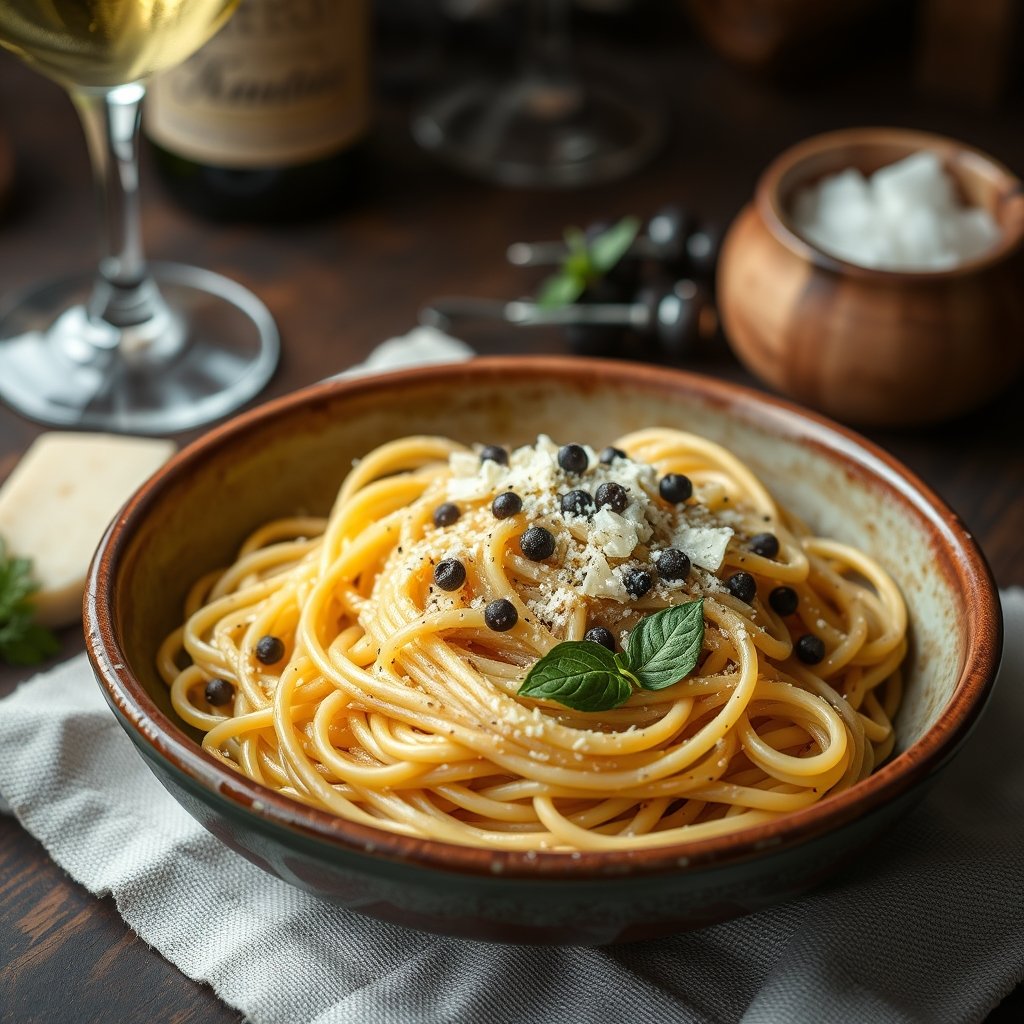
Mastering an authentic Roman cacio e pepe recipe requires only three core ingredients: pasta, freshly cracked black peppercorns, and finely grated Pecorino Romano cheese. Despite its minimalist profile, this Roman classic delivers a remarkably glossy, rich sauce when executed with proper technique. The secret lies in emulsifying the starchy cooking water with grated sheep’s milk cheese to create a silk-like coating without adding butter or heavy cream. In just twenty minutes, you can bring the genuine taste of an Italian trattoria straight to your own kitchen table with confidence.
Why You’ll Love This Cacio E Pepe Recipe
This classic pasta stands out for its bold, savory simplicity:
– Fast: Ready in under 20 minutes from start to finish.
– Minimal Ingredients: Requires only pasta, cheese, black pepper, and water.
– Luxurious Texture: Starchy cooking liquid creates a natural, velvety emulsion without any cream.
– Restaurant Quality: Delivers deep, authentic Roman trattoria flavor using simple pantry fundamentals.
Key Ingredients for Cacio E Pepe Recipe
- Pecorino Romano: Authentic sheep’s milk cheese gives the sauce its signature salty, sharp backbone. Grate it on a microplane so it melts instantly without clumping.
- Whole Black Peppercorns: Toast whole peppercorns in a dry skillet before coarsely grinding them to unlock warm, floral oils rather than harsh bitterness.
- Tonnarelli or Spaghetti: Bronze-die extruded pasta releases maximum surface starch into the water, which is essential to bind the cheese and water into a smooth sauce. Check the recipe card for exact quantities.
How to Make Cacio E Pepe Recipe Step-by-Step
- 1. Boil the Pasta: Cook your pasta in a wide pot with half the usual amount of water. Keeping the water volume low concentrates the starch, which acts as the natural binder for your sauce. Cook until two minutes before al dente.
- 2. Toast the Black Pepper: While the pasta boils, toast cracked black peppercorns in a wide skillet over medium heat for one to two minutes until fragrant. Add a ladle of bubbling pasta cooking water to halt the toasting and extract the pepper flavor.
- 3. Create the Cheese Paste: Place the finely grated Pecorino Romano into a heatproof mixing bowl. Slowly drizzle in small splashes of warm pasta water, whisking vigorously with a fork until a smooth, thick, spreadable paste forms with zero graininess.
- 4. Emulsify the Sauce: Transfer the undercooked pasta directly into the pepper skillet over low heat. Toss vigorously for one minute to coat the strands. Remove the pan completely from heat, wait thirty seconds so the pan cools slightly, then stir in the cheese paste.
- 5. Finish and Coat: Continue stirring and tossing vigorously, adding small splashes of warm pasta water as needed until a creamy, glossy emulsion fully coats every strand. Serve immediately while warm.
Tips for Perfect Cacio E Pepe Recipe
- Tips for perfect cacio e pepe recipe execution: Never add cheese directly into a blistering hot skillet. Excess heat above 140 degrees Fahrenheit causes dairy proteins to seize, yielding stringy rubber clumps instead of a glossy sauce.
- Grate the Pecorino with a microplane or the smallest holes of a box grater so it looks like fluffy powdered snow, ensuring fast dissolution.
- Salt your boiling water lightly compared to normal pasta pots, because Pecorino Romano is naturally very salty and the concentrated water reduces quickly.
Substitutions and Variations
- Cheese Balance: If pure Pecorino Romano feels too pungent or salty, substitute half with aged Parmigiano-Reggiano for a rounder, nuttier flavor profile.
- Gluten-Free Option: Substitute standard durum wheat with high-starch gluten-free spaghetti made from corn and rice, boiling carefully to avoid breakage.
- Pasta Shapes: Traditional Roman tonnarelli or spaghetti work best, but ribbed short cuts like rigatoni or paccheri trap the luscious pepper sauce exceptionally well.
Serving Suggestions
- Serve this rich pasta in warm shallow bowls topped with a final dusting of Pecorino Romano and coarse cracked pepper.
- Pair with a crisp, bitter green salad dressed in simple red wine vinaigrette to cut through the rich cheese.
- Pour a glass of dry, mineral-driven Italian white wine such as Frascati or crisp Verdicchio.
Storage and Reheating
Storage: Cacio e pepe is best enjoyed fresh from the pan. Store leftovers in an airtight glass container in the refrigerator for up to 2 days. Freezing is not recommended because the dairy emulsion will break. Reheat gently in a nonstick skillet over low heat with two tablespoons of warm water, tossing continuously until loose and creamy. Avoid microwaving at high power. To ensure proper doneness and food safety, refer to the North American Olive Oil Association standards guide.
Reheating: Warm in a skillet over low heat with a few spoonfuls of water, tossing constantly.
Frequently Asked Questions
Why did my cheese turn into a clump?
Cheese clumps when exposed to excessive heat or when grated too coarsely. The proteins seize and separate from the fats above 140 degrees Fahrenheit. Always remove your skillet from the burner and allow it to cool slightly before folding in finely microplaned cheese.
Can I use pre-grated cheese from the grocery store?
No, avoid pre-shredded packaged cheeses. They contain cellulose and anti-caking starches that prevent the cheese from melting smoothly into the pasta water. Freshly grating a wedge of authentic Pecorino Romano just before cooking is essential for a velvety emulsion.
Should I add butter or olive oil for creaminess?
Traditional Roman cacio e pepe uses neither butter nor oil. The creamy texture comes exclusively from the mechanical friction of tossing starchy pasta water with cheese. Adding fats can cause the delicate sauce to split and alters the authentic flavor profile.
With just a little patience and temperature control, this authentic pasta dish brings true Roman magic to your dinner table. Plate it immediately, grab your fork, and enjoy every rich, peppery bite.
Authentic Roman Cacio e Pepe Pasta
Ingredients
Instructions
Tips
Use less cooking water than normal so the starch concentration is high enough to bind the sauce. Never add cheese paste while the pan is sitting directly over a hot flame. A microplane grater produces the airy cheese texture required for zero clumping.
Substitutions
Use half Pecorino Romano and half Parmigiano-Reggiano for a milder flavor. Substitute bronze-cut gluten-free spaghetti if dietary needs require.
Notes
Work quickly once pasta is transferred, as pasta water cools rapidly and affects emulsion stability.
You Might Also Like

Velvety Potato and Leek Soup
Learn how to make delicious potato leek soup recipe with this easy step-by-step recipe for foolproof,…
Slow Cooker Pepperoncini Beef Roast
Learn how to make delicious mississippi pot roast recipe with this easy step-by-step recipe for foolproof,…

Silky Ginger Egg Drop Soup
Learn how to make delicious egg drop soup recipe with this easy step-by-step recipe for foolproof,…