
How to Find Food Near Me Within 0.2 Mi Effectively
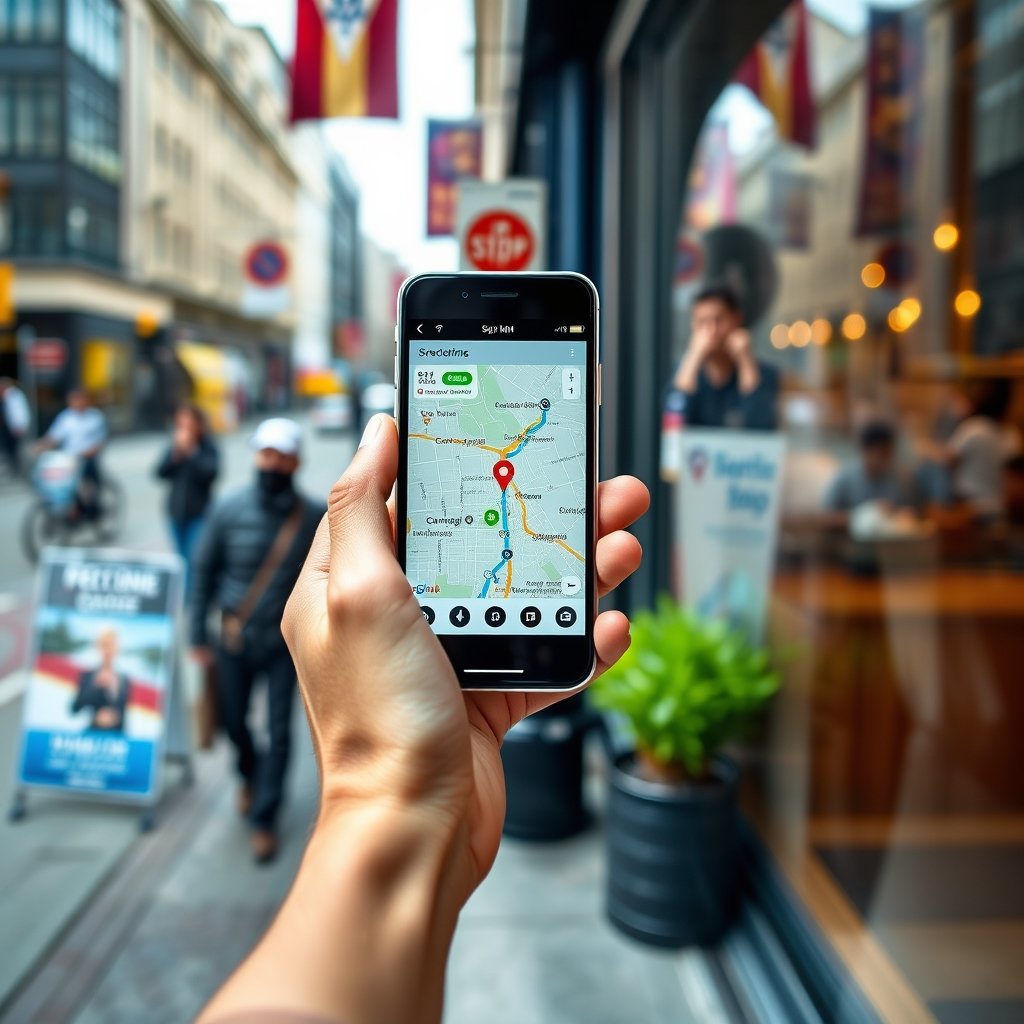
Finding food near me within 0.2 mi requires an understanding of how geolocation services and local business directories interface with mobile hardware. When you search for options within such a tight radius, you are engaging with proximity-based search algorithms that prioritize hyper-local relevance over broad popularity.
Defining food near me within 0.2 mi: Core Concepts & Fundamentals
The concept of hyper-local search refers to the ability of digital maps and search engines to filter results based on precise latitude and longitude coordinates. A search for food near me within 0.2 mi effectively limits the scope to a walkable distance, typically covering a few city blocks. This radius is designed for immediate convenience rather than destination-based dining.
How It Works: The Underlying Mechanics
Search engines rely on a combination of technologies to provide these results. Your mobile device communicates with GPS satellites and Wi-Fi access points to triangulate your current position. This data is then sent to a central server that filters businesses based on their registered physical addresses. When you query for food near me within 0.2 mi, the system calculates the walking distance via street networks rather than a straight-line bird's-eye view, ensuring the path is actually traversable.
Critical Drivers & Key Influencing Factors
Several elements dictate the accuracy of your search results:
- Signal Strength: Poor GPS reception can cause your location to drift, potentially excluding valid results.
- Business Verification: Establishments must have updated their physical address in public registries to appear accurately.
- Connectivity: A stable data connection is required to refresh the real-time map interface.
- Operating Hours: Many systems automatically hide locations that are currently closed, even if they fall within the 0.2-mile range.
Practical Industry Examples & Real-World Applications
In dense urban environments, this search functionality is often used by office workers or travelers who need to find a quick bite during a short break. Because the search radius is so small, users often rely on visual cues from the map interface rather than just text lists. Local businesses that maintain accurate opening hours and clear storefront photos are much more likely to be selected by users filtering for extreme proximity.
Debunking Common Misconceptions
It is a common belief that all search engines update their databases instantaneously. In reality, there is often a delay between a business closing or moving and the digital map reflecting that change. Additionally, searching for food near me within 0.2 mi does not guarantee that the business is currently accepting orders or that it is open to the public at that specific moment.
Strategic Best Practices for Long-Term Success
To ensure the best experience when searching for food, consider these steps:
- Use the map view to verify the entrance location, as some businesses might be located in alleyways or building interiors.
- Check the most recent user updates for any temporary closures or construction that might block access.
- Keep your location services calibrated to ensure the device knows exactly where you are standing.
Frequently Asked Questions
Why do some results appear that are further than 0.2 miles away?
Sometimes, if there are no results within the specific 0.2-mile radius, the search engine will automatically expand the search to the nearest available options to provide helpful suggestions.
Can I filter by cuisine type within this distance?
Yes, most platforms allow you to add specific keywords like "bakery" or "deli" alongside your location search to narrow down the results.
Does this search work better on Wi-Fi or cellular data?
Both are effective, but cellular data is often more reliable for precise geolocation when you are moving around a city.
Conclusion: Key Takeaways
Mastering the use of hyper-local search tools transforms how you navigate your immediate surroundings. By understanding that location accuracy depends on both device hardware and the precision of business data, you can make more informed decisions when searching for food. Focus on the map interface to ensure the distance is truly walkable, and always verify current operating status to avoid disappointment.
You Might Also Like

Understanding Food Grade Mineral Oil: Evidence-Based Facts and Safety Standards
Explore the evidence-based facts regarding food grade mineral oil, its safety standards, and practical applications in…
Read More →
Piada Italian Street Food: A Look at the Authentic Origins and Modern Evolution
Explore the history, craftsmanship, and cultural evolution of piada Italian street food, a staple of the…
Read More →
Mediterranean Diet Food List: A Practical Quick Reference Guide
A concise, scannable guide to the Mediterranean diet food list, focusing on core staples, nutritional benchmarks,…
Read More →